HVAC Maintenance in Hospitals for Clean and Hygienic Air
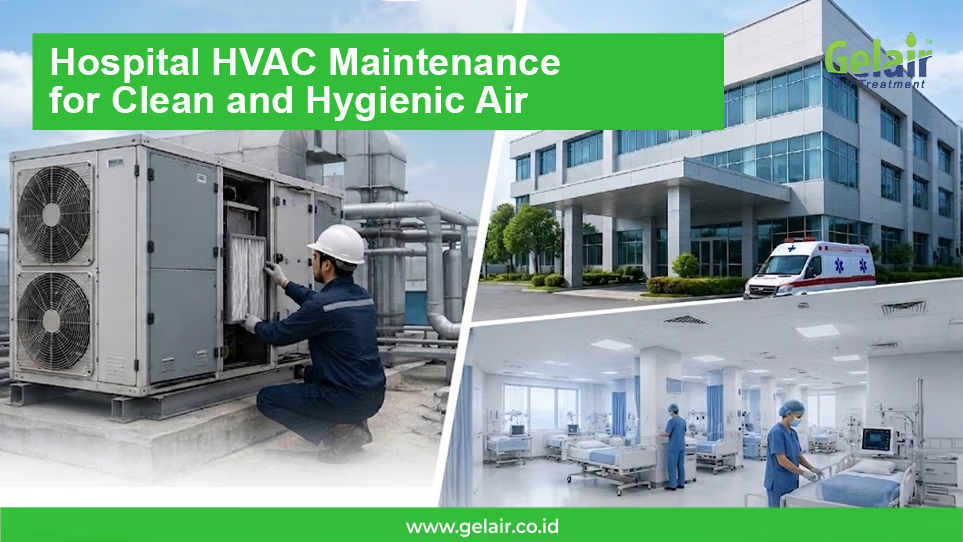
Why Is Air Quality in Hospitals So Important?
Hospitals are high-risk environments for the spread of infections. Beyond the cleanliness of medical equipment and facilities, indoor air quality (IAQ) plays a crucial role in protecting patients and healthcare workers. Uncontrolled air can become a medium for the spread of:
- Bacteria
- Viruses
- Fungi (mold)
- Other harmful airborne particles
This is especially dangerous for individuals with weakened immune systems, such as ICU patients, the elderly, and children.
The Role of AC and HVAC Systems in Hospitals
Air conditioning (AC) or HVAC (Heating, Ventilation, and Air Conditioning) systems do more than just cool indoor spaces. They are essential for:
- Regulating temperature and humidity
- Filtering airborne microorganisms
- Maintaining proper air circulation
- Controlling air pressure (e.g., isolation rooms, ICU)
However, without proper maintenance, these systems can become sources of contamination.
Risks of Poorly Maintained AC Systems in Hospitals
Unmaintained AC systems can lead to serious risks, including:
- Spread of Nosocomial Infections : Infections acquired within healthcare facilities due to environmental exposure.
- Growth of Mold and Bacteria : Moist filters and air ducts create ideal conditions for microbial growth.
- Respiratory Issues : Contaminated air may trigger allergies, irritation, and even lung infections.
- Reduced Energy Efficiency : AC units must work harder, increasing energy consumption and operational costs.
HVAC Hygiene Standards in Healthcare Facilities
Based on guidelines from health authorities and global best practices:
- AC filters must be cleaned and replaced regularly
- Ventilation systems must be properly controlled
- Temperature and humidity must be maintained within safe ranges
- Critical areas require advanced filtration (e.g., HEPA filters)
The goal is to ensure that circulating air remains safe and does not contribute to infection risks.
How to Maintain Air Quality in Hospitals
To ensure optimal air quality, hospitals should:
- Perform regular AC maintenance
- Replace filters according to schedule
- Clean air ducts and ventilation systems
- Conduct routine HVAC inspections
- Control indoor humidity levels
These measures are essential components of infection control systems in healthcare facilities.
Additional Solutions to Maintain Hygienic Air Conditioning
In addition to routine maintenance, some healthcare facilities use additional treatments on their air conditioning systems to help maintain stable and hygienic air quality. One solution is Gelair Air Treatment, a multifunctional, antibacterial and antifungal AC cleaner containing Tea Tree Oil (Melaleuca alternifolia)—a natural ingredient known for its antimicrobial properties.Benefits of Gelair Air Treatment for AC Systems & Indoor Air
Using Gelair Air Treatment as part of AC maintenance offers several advantages:
- Helps Inhibit Microbial Growth : Tea tree oil is known for its natural ability to help suppress the growth of bacteria, fungi, and other microorganisms in AC systems and air ducts.
- Maintains Clean Air Duct Systems : Regular use helps keep internal HVAC components cleaner, including hard-to-reach ducting areas.
- Supports More Stable Indoor Air Quality : Air produced by AC systems becomes cleaner and more comfortable, supporting a healthier environment.
- Reduces Unpleasant Odors : Helps minimize odors caused by mold and bacteria within AC systems.
- Natural-Based Solution : Formulated with natural active ingredients, offering an alternative to harsher chemical-based treatments (when used as directed).
- Easy to Integrate into Routine Maintenance : Can be applied as part of regular AC maintenance without complex procedures.
- Supports Infection Control Programs : Helps maintain cleaner air systems, contributing to broader infection prevention strategies in healthcare settings.
Positive Impact of Clean Air in Hospitals
Maintaining clean air provides significant benefits:
- Supports faster patient recovery
- Reduces infection risks
- Improves comfort in treatment areas
- Enhances staff productivity
- Builds trust in healthcare facilities
Conclusion
Hospital AC maintenance is not just a technical task—it is a critical component of infection control. By combining routine maintenance, proper HVAC management, and appropriate supplementary solutions, hospitals can maintain optimal indoor air quality.
FAQ (Frequently Asked Question) :
- Why is air quality important in hospitals? Because air can carry microorganisms that pose risks to patients and healthcare workers.
- How often should hospital AC systems be cleaned? Typically Filters: every 1–3 months, System inspection every 3–6 months, Deep cleaning based on operational standards
- What are the risks of dirty AC systems? They can spread infections, cause respiratory issues, and reduce system efficiency.
- What is HVAC in hospitals? HVAC is a system that regulates temperature, humidity, and air circulation to maintain safe indoor air quality.
- Is cleaning AC systems alone sufficient? Not always. Physical cleaning should be complemented with system control and, in some cases, additional treatments.
- How can hospitals maintain hygienic air? Through routine AC maintenance, filter replacement, humidity control, and regular inspections.
- What are the benefits of clean air for patients? It supports recovery, reduces infection risk, and improves comfort.
- Is using additional air treatment safe? When used according to instructions and compatible with AC systems, it can be a beneficial complement to maintenance.
Check the following topic link for indoor Gelair applications.
https://www.gelair.co.id/en/blog/gelair-block-within-air-conditioning-unit-prevents-mold/
https://www.gelair.co.id/en/blog/gelair-all-purpose-provides-long-lasting-protection/