How to Clean an AC Properly to Keep the Air Clean and Cool
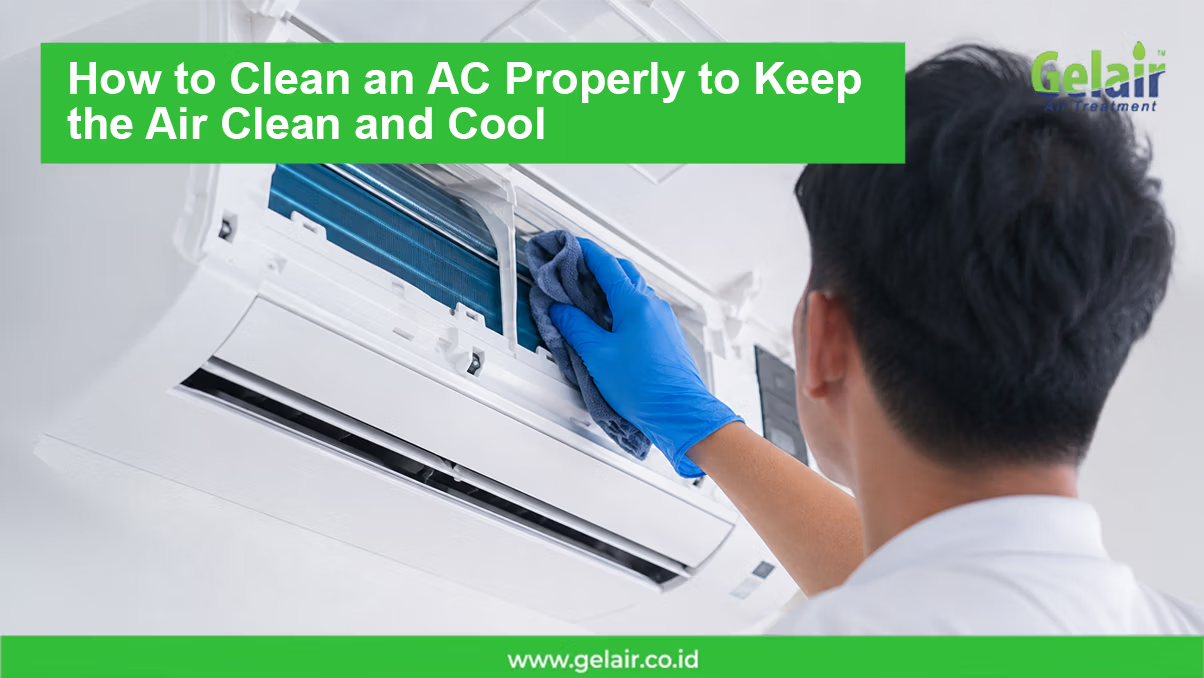
Air Conditioners (AC) have become an essential part of daily life, whether at home, in the office, at school, or in business premises. Beyond providing coolness, an AC also helps create a comfortable environment for daily activities.
However, many people only pay attention to whether the AC is still cold or not. In fact, an AC that appears to function normally is not necessarily clean. Dust, dirt, and moisture can accumulate inside the AC unit over time. If not maintained regularly, indoor air quality can decline, and AC performance can become less than optimal.
Why Does an AC Need to Be Cleaned?
Every day, an AC draws air from the room and filters various particles such as dust. Over time, these particles adhere to the filters and internal components of the AC. If left uncleaned for too long, this can cause:
- Airflow to become weaker.
- Cooling to be less effective.
- Increased electricity consumption because the AC has to work harder.
- Unpleasant odors when the AC is turned on.
- Dust to spread back into the room more easily.
Routine maintenance helps maintain AC performance while supporting better air quality.
Steps to Clean an AC Properly
Turn Off the Power First
Before cleaning, ensure the AC is turned off and disconnected from the power source. This step is crucial to ensure safety during the cleaning process.
Clean the Air Filter
The filter is the part that gets dirty most easily and should be cleaned regularly. How to clean it:
- Open the front cover of the AC according to the manufacturer's instructions.
- Carefully remove the filter.
- Clean it under running water.
- If there is stubborn dirt, use a soft-bristled brush.
- Allow the filter to dry completely before reinstalling it.
- Avoid reinstalling a wet filter as it can trigger excess humidity inside the unit.
Clean the Exterior of the Indoor Unit
Use a soft, slightly damp cloth to wipe the surface of the AC. Avoid using harsh chemicals or cleaning liquids that could damage the plastic coating.
Inspect the Evaporator Fins
Evaporator fins serve to absorb heat from the air. This part has a thin structure, making it easy to bend. If it looks very dirty, it is best to have it cleaned by a technician to prevent damaging the components.
Ensure the Drain Line Is Not Blocked
A clogged condensate drain line can cause water to drip from the indoor unit. Check whether the water flow is smooth and free from obstructing dirt.
Clean the Area Around the Outdoor Unit
The outdoor unit also requires attention. Ensure the surrounding area is free from:
- Dry leaves.
- Thick dust.
- Trash.
- Obstructions that block air circulation.
Good air circulation helps the AC run more efficiently.
How Often Should an AC Be Cleaned?
Cleaning frequency depends on the environment and intensity of use. As a general guide:
- AC filter: every 2–4 weeks.
- Thorough cleaning by a technician: every 3–6 months for intensive use, or according to manufacturer recommendations.
- Routine inspection: at least once a year to ensure all components are functioning well.
If the AC is used in a dusty area or operates for most of the day, maintenance may need to be performed more frequently.
Common Mistakes to Avoid
Some common mistakes that should be avoided when cleaning an AC include:
- Spraying water directly onto electrical components.
- Using stiff-bristled brushes that can damage the evaporator fins.
- Reinstalling the filter before it is completely dry.
- Ignoring maintenance schedules until the AC starts malfunctioning.
- Disassembling internal components without proper knowledge or equipment.
Maintaining Air Quality Involves More Than Just Cleaning the AC
Cleaning the AC is an important step in maintaining indoor air quality. However, results will be more optimal when paired with other habits, such as:
- Cleaning dust regularly.
- Maintaining good ventilation whenever possible.
- Reducing indoor pollution sources.
- Servicing the cooling system periodically.
- Utilizing supporting solutions to help maintain air quality based on the room's needs.
Optimize AC Maintenance with Gelair Coil Duct and Gelair Block
Cleaning the AC regularly is essential for maintaining cooling performance. However, in central AC or split AC systems used daily, air quality is also affected by the condition of the components inside the system and the cleanliness of the air distribution ducts.
To help support air quality management, Gelair Air Treatment provides two solutions that can be applied to air conditioning systems.
Gelair Block is a patented system utilizing a specially formulated gel matrix placed in the HVAC system, where Gelair releases a specific concentration of top-quality Australian Tea Tree Oil vapor throughout the HVAC system. Tea Tree Oil (a 100% natural essential oil) is a broad-spectrum antimicrobial and antifungal agent against MOLD, BACTERIA, VIRUSES, and UNPLEASANT ODORS caused by humid indoor air.
How is Gelair Block applied?
In split AC systems, the package is opened and placed on the top cover of the AC airflow. For HVAC ducting system applications, open the package and place the Gelair Block in the AHU between the filter and the cooling coil. Gelair comes in a vacuum pouch, so some solution remains inside the packaging. This can be easily poured into the AHU to help provide an initial burst of Tea Tree Oil vapor into the system.
In addition to using Gelair Block for 24/7 continuous indoor Air Treatment, Gelair products also include an AC Cleaner variant. This product is the Gelair Coil & Duct Solution.
Gelair Coil & Duct Solution is a specialized liquid cleaner (AC Cleaner) for Air Conditioning (AC) designed to remove visible dirt, dust, and mold. When periodic AC washing uses only water, microbes will quickly reappear. The antibacterial benefits of Gelair Coil & Duct Solution provide an EFFECTIVE SOLUTION for cleaning cooling coils, condensate pans, and other areas exposed to mold and bacteria in HVAC systems.
The technology implemented in Gelair products ensures that the effectiveness against MOLD, BACTERIA, and VIRUSES is maintained. By cleaning the Air Conditioning (AC Cleaner) and maintaining air quality (Air Treatment) after cleaning, the effects of Tea Tree Oil can spread throughout the entire room—even to hard-to-reach areas—via the air distributed through the HVAC system. This can have practical implications for public health, particularly in controlling and preventing airborne diseases in closed and poorly ventilated environments.
AC Maintenance and Air Quality Management Go Hand in Hand
AC maintenance does not stop at cleaning filters or periodically washing the unit. Component inspections, coil cleaning, duct maintenance, and the use of supporting solutions like Gelair Coil Duct and Gelair Block can all be part of an indoor air quality management strategy.
By combining routine AC maintenance with good air quality management, environments in homes, offices, schools, hotels, healthcare facilities, and commercial areas can feel much more comfortable for daily activities.
Conclusion
Cleaning and maintaining an AC regularly is an essential step to preserve cooling performance while supporting indoor air quality. Maintenance tasks such as cleaning filters, washing the evaporator, checking drain lines, and scheduling periodic servicing help the AC operate more optimally and ensure comfort for occupants.
To complement these efforts, using air treatment solutions such as Gelair Block and Gelair Coil Duct in central AC or HVAC systems can be integrated into an indoor air quality management strategy. Combined with good AC maintenance, these two products help create a more comfortable environment in homes, offices, schools, healthcare facilities, hotels, and various commercial spaces.
Taking care of an AC is not just about keeping a room cool, but also about creating a clean, comfortable environment that supports daily activities. With proper care and the use of solutions like Gelair, indoor air quality can become an important part of a healthier, more comfortable lifestyle.